Cyberattacks target critical infrastructure necessitating stronger protections

70%
of cyberattacks in 2024–2025 targeted critical infrastructure sectors

146%
global increase in sites impacted by cyber attacks with physical consequences

84%
of known critical infrastructure cyber incidents, the initial access vector could have been mitigated

56%
of organizations believe that GenAI will provide an overall advantage to attackers within the next two years
Globally there is an increasing number of malicious actors trying to cause mass disruption to public life and safety by targeting critical infrastructure and disrupting supply chains with cyberattacks. Although definitions of critical infrastructure can vary across countries and regions, the sectors listed are all considered vital to the continuity of society, even if they are not specifically called out by local law or regulation. Critical infrastructure organizations face mounting pressure to reduce risk and to adopt a Zero Trust strategy that sets identity as the new perimeter in order to combat the cascading and devastating impact that attacks can have on vital business operations
Not all MFA is created equal
Multi-factor authentication (MFA) should be a first-line defense of any cybersecurity strategy to protect data, information technology (IT), and operational technology (OT) environments. And while any MFA is better than passwords, not all forms of MFA offer the same level of security or frictionless user experience.

Usernames and passwords are easily hacked. Legacy mobile-based authentication OTP codes, and push notifications are highly susceptible to phishing attacks, malware, SIM swaps, and attacker-in-the-middle attacks. Mobile-based MFA can also be costly as organizations may be liable for mobile-related service costs. MFA investments must provide critical infrastructure organizations with protection that evolves alongside risk and compliance requirements. To be future-proofed, the MFA investment should reflect the growing regulatory requirement for phishing-resistant MFA, the need to implement Zero Trust, and modern login flows such as passwordless.
Safeguard your IT and OT ecosystem with Yubico
Yubico solutions meet you where you are on your cybersecurity journey, while paving the way to a modern authentication infrastructure, and jumpstarting your plans to implement a Zero Trust framework. With Yubico solutions, you can be confident that your data and intellectual property are secured, and product integrity is always ensured.
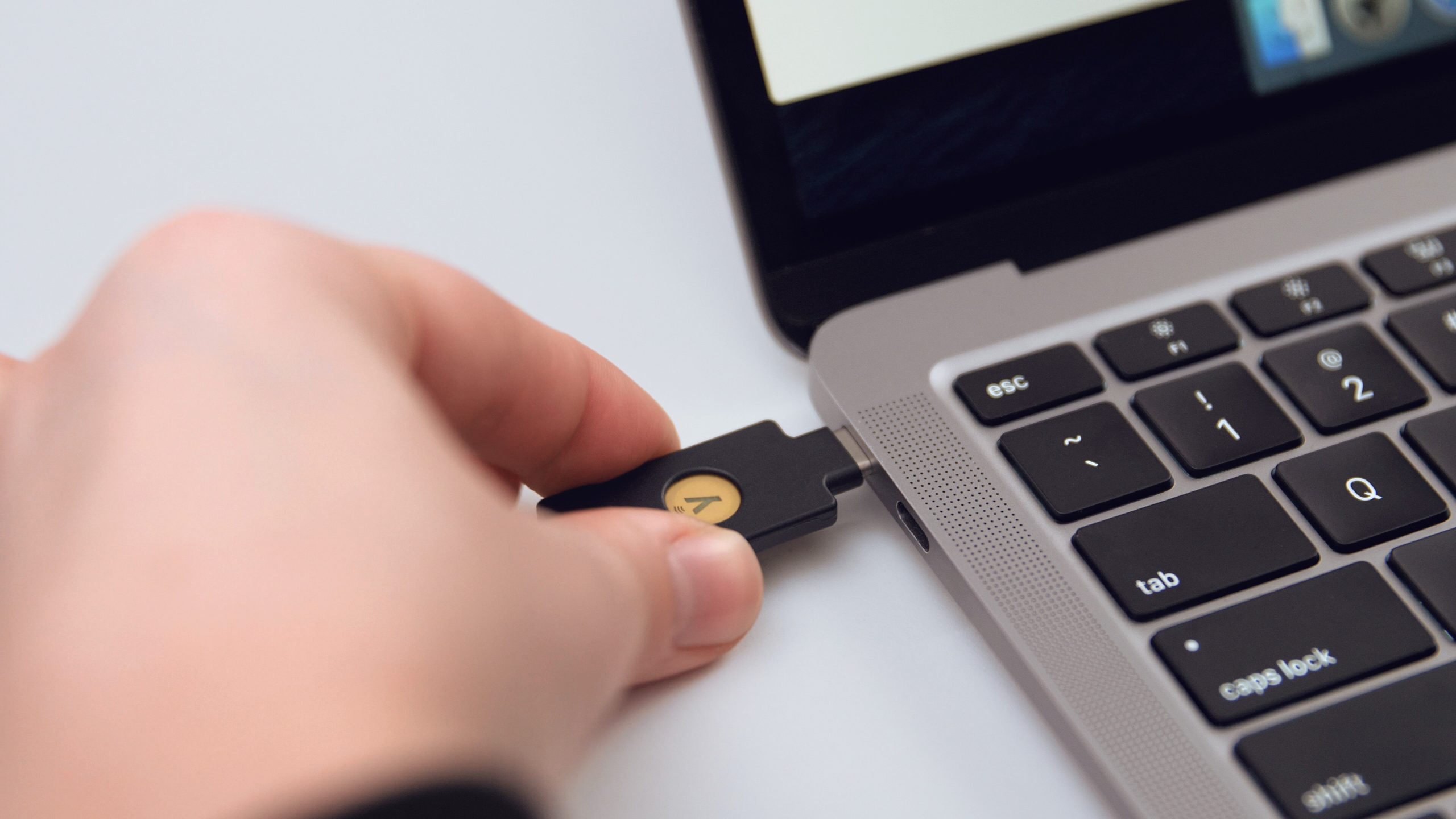
The YubiKey
Secure human-to-machine communication
A pioneer in modern, hardware-based authentication and Yubico’s flagship product, the YubiKey is designed to meet you where you are on your authentication journey by supporting a broad range of authentication protocols, including FIDO U2F, WebAuthn/FIDO2 (passkeys), OTP/ TOTP, OpenPGP and Smart Card/PIV. The YubiKey is a device-bound passkey, IP-68 certified, FIPS validated and operates without battery or network connectivity.
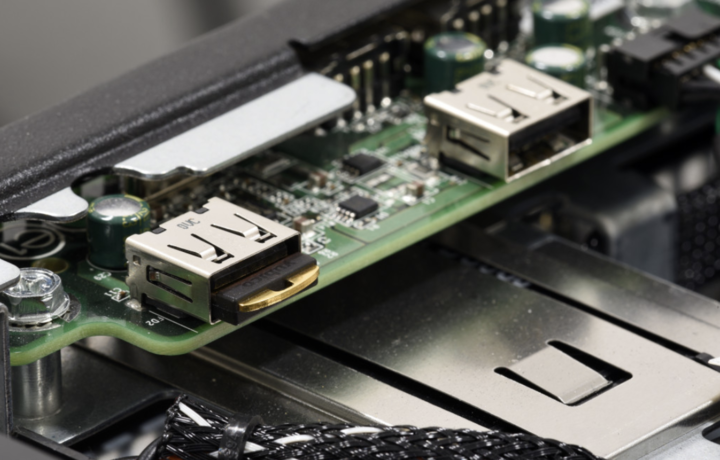
Yubico Hardware Security Module (HSM) 2
Secure machine-to-machine communication
The world’s smallest HSM, YubiHSM 2, packs a lot of power, and offers game changing cryptographic protection for servers, applications and computing devices. Secure your public key infrastructure (PKI) environments, encrypt your files and databases and securely sign code or any digital artifact to raise the bar for security for your IT and OT systems. The YubiHSM 2 is also FIPS validated for regulated industries.
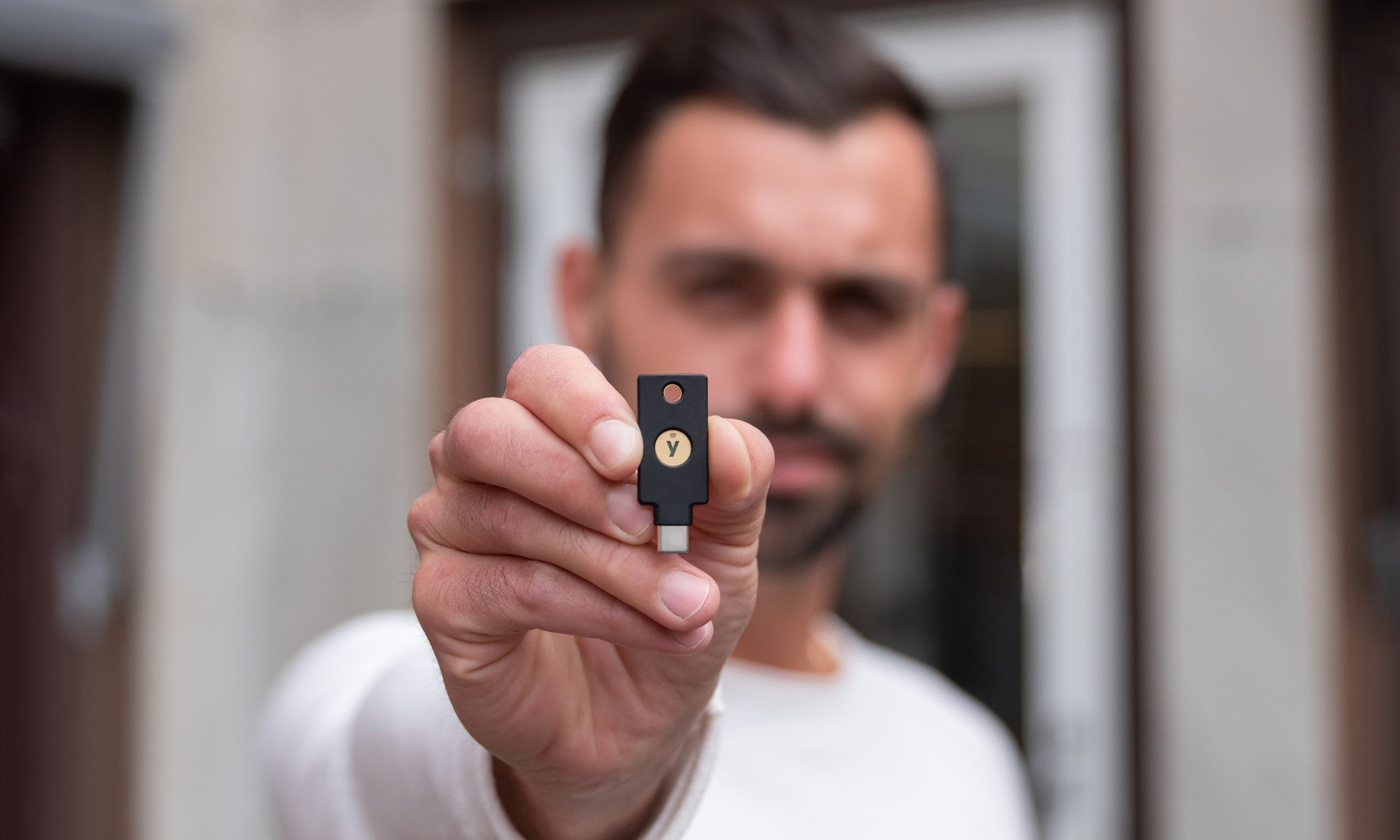
YubiKey as a Service
An industry-first cybersecurity service that fast tracks organizations to strong phishing resistance and passwordless at scale. Receive exclusive access to turnkey Enrollment and Delivery services that help IT get users quickly onboarded with YubiKeys. YubiKey as a Service offers a choice of form factors, replacement stock, and priority customer support.
yubi.co/yubikeyasaservice
Discover how global manufacturers and industry leaders are revolutionizing enterprise security and hardening critical IT and OT environments with phishing-resistant Yubico solutions.
Yubico and T-Mobile deployment of phishing-resistant YubiKeys across its operations enhances Un-carrier’s work systems security
Yubico, the leading provider of hardware authentication security keys, has been working with T-Mobile U.S. and Yubico highlighted the partnership in a press release on their deployment of FIDO2 YubiKeys across its teams including employees, vendors and authorized retail partners. The passwordless, device-bound passkeys replaced legacy authentication to further secure the Un-carrier’s work systems and information amidst the growing escalation of cyber threats, stopping unauthorized credential use by bad actors.
With Yubico’s FIDO2 security keys, T-Mobile’s teams no longer have to change or remember their passwords, or type in OTP codes that could be intercepted by bad actors; they use their YubiKey to passwordlessly authenticate and verify their identity to gain access to the resources they need.
“T-Mobile took a critical step forward to further reduce credential phishing by deploying the stronger, device-bound passkey solution that Yubico offers,” said Jeff Simon, Chief Security Officer, T-Mobile. “Once we had our YubiKeys in hand we were able to get them up and running across the company in less than three months, and we’ve seen the positive results after just one year of having them. That progress is even more important in today’s environment where bad actors continue to wage sophisticated campaigns to attempt to infiltrate telecommunication networks. YubiKeys continue to be an important element of how we approach cyber protection.”
Munich protects itself from cyber attacks with YubiKeys
Public sector organizations, such as the City of Munich, face many of the same cyber threats as those in the private sphere, but can be even more enticing targets for cyber criminals who want to disrupt crucial public services or cause financial harm. In January 2026, German companies were exposed to an average of 1,314 cyberattacks per week.
The city’s IT leadership began market research back in 2017 to a new MFA strategy aligned with their multifaceted setup: an identity management system in the backend, a Windows domain with Active Directory and an SSO endpoint. While mobile authentication methods were considered, IT Architect Matthias Wagner and team were keen to have a separate factor, and so they began investigating the vendor landscape for FIDO2 hardware security keys. They considered different vendors, and ultimately opted to purchase the YubiKey 5 Series, with contactless NFC capability, in both USB-A and USB-C models. In addition to Yubico’s proven and innovative authentication solution, that the company was European, with headquarters in Stockholm, Sweden was also a key consideration.
By implementing YubiKeys, the City of Munich is a pioneer in ensuring business continuity and cyber resiliency against modern AI-based cyber attacks that are increasingly sophisticated. They successfully rolled out to the full range of employees city-wide with an IT account. This meant over 30,000 employees, in a broad selection of departments ranging from HR and finance, to waste management and education. Reflecting on their Looking back more than five years after deployment, the City of Munich is pleased with the decision to implement FIDO authentication across the organization. “We are definitely more secure,” says Wagner.
Mitsubishi Electric strengthens global cybersecurity with the YubiKey
Mitsubishi Electric is a global leader in product innovation and the manufacturer of electrical and electronic products and systems, for consumers, businesses and a wide range of critical infrastructure including energy, transportation and information and communication systems. Established in 1921, Mitsubishi Electric is headquartered in Tokyo, Japan and globally active in over 120 countries.
As a key supplier of electrical and electronics products and solutions to critical infrastructure sectors worldwide, and a major supplier of Japan’s defense systems, it is paramount for Mitsubishi Electric to guard against persistent cyber attacks.
In order to guarantee that their investment in MFA was well suited, Mitsubishi Electric wanted to ensure that the solution met the standards set by the National Institute of Standards and Technology (NIST) Digital Identity Guidelines and the Authenticator Assurance Level (AAL), which are recognized worldwide as equitable standards for identity management. While implementing MFA at various divisions and affiliates, Mitsubishi Electric faced a variety of challenges including, frequently, mobile-restricted scenarios, as most production facilities limit the usage of any mobile devices.
The YubiKey emerged as an optimal solution for both IT and Operational Technology (OT), including access to industrial control systems (ICS), requiring no additional hardware, software, external power, batteries or network connections. Embracing Yubico solutions, such as the YubiKey, significantly raises the bar for security and establishes a robust foundation for Mitsubishi Electric to facilitate and safeguard its digital transformation by paving a path to secure authentication that does not require passwords.
Schneider Electric enhances global supply chain security
As leaders in the digital transformation of energy management and the manufacturing of electric products, Schneider Electric worked closely with Yubico to deploy phishing-resistant YubiKeys to increase security with MFA in its power operation Supervisory Control and Data Acquisition (SCADA) system, a system common in manufacturing.
Lloyd was tasked with a challenge to integrate multi-factor authentication (MFA) on an isolated system—without the use of the Internet or traditional methods such as SMS. With the YubiKey, Schneider Electric is able to meet its requirement for MFA and to ensure only authenticated users can gain access to operate the SCADA system. Further, the YubiKey has helped reduce system interruptions during shift changes or when step-up authentication is needed for certain operations.
After positive results from the initial deployment of YubiKeys, Schneider Electric then expanded to solve additional use cases in managing its supply chain. Schneider Electric deployed the YubiHSM 2 with third-party vendors to proactively increase security within their supply chain. Creating a dual encryption process allows both the vendor and Schneider Electric to have confidence that products with the Schneider Electric brand are indeed authentic based on encrypted keys that are embedded by both companies during manufacturing.
Protecting critical infrastructure in Ukraine
The Russian invasion of Ukraine is a battle in both the physical and the digital world. On both sides, cyberwarfare plays a more critical role than in any other war in human history, with the biggest attack vector and threat being weak login credentials.
In March 2022, Yubico received a request from authentication partner Hideez to help to protect critical infrastructure in Ukraine. When the war started, much of the Hideez team decided to stay in Ukraine to lend their expertise, products and services to the most targeted Ukraine entities and IT systems. With a donation of 20,000 YubiKeys, a dozen government agencies and critical infrastructure providers were able to quickly secure themselves against rising rates of attacks.
“Since the war began, we have experienced a massive increase in phishing attacks,” explains a cybersecurity executive at a Ukrainian energy plant. “To mitigate this risk, our organization required us to change passwords every day, which did not provide sufficient security and was time consuming as well as an added stress to employees working in a war zone. We needed something that was not only more secure, but that also worked seamlessly across a range of systems and devices. We also needed a tool that worked from locations where internet and cell phone connectivity are not stable. Additionally, because of the advanced types of phishing, and man-in-the-middle attacks, we simply could not rely on legacy or mobile-based authentication.”
One of the critical infrastructure organizations who benefited from the deployment was Naftogaz, a government-owned group of oil and gas companies. Naftogaz-Bezreka, the security group responsible for securing Naftogaz, was already keen to deploy the YubiKey, but it was not until the invasion and Yubico’s donation that the deployment could be accelerated. The keys are used to secure authentication for logging into Windows, workstations and other applications like Microsoft Office 365. The YubiKeys offer enhanced protection for users who require privileged access, as well as enabling safe login for remote workplaces.
Securing critical infrastructure at an AsiaPacific energy company
For this leader in electricity distribution in Asia-Pacific, serving millions of customers, much of the responsibility for protecting operations from cyberattacks falls to the OT Security Specialist, a job which sits at the border between IT and OT.
During the procurement process of an authentication solution, the energy company had to balance multiple requirements. It was important that the product would also integrate easily with existing infrastructure, without requiring additional software. This ruled out one possible solution—Smart Cards—which require specific drivers and Smart Card readers to function. The OT Security Specialist was also keen to find a solution that was user-friendly.
The OT Security Specialist was most attracted by how YubiKeys balanced security and usability: “if you’ve got to physically touch the button, you know a user is physically there using it. We could set up one YubiKey as MFA for all a user’s accounts, so they don’t need six different TOTPs.” To protect the hardware and live equipment upon which distribution relies, the organization chose the YubiKey to secure all users who access the operational environment— offering a balance of security. Further, the flexibility of YubiKey as a Service helps guarantee the highest level of protection into the future.
Boliden advances its reputation for innovation with YubiKeys
Boliden is one of Europe’s leading metal mining companies. Based in Sweden, with presence around the Nordic region and beyond, Boliden produces a vast array of the metals required for modern life: zinc, copper, lead, nickel, gold, palladium, platinum and silver. Known for their commitment to sustainability, with a vision to be the most climate friendly metal provider in the world, Boliden operates at the forefront of innovation, utilizing cutting-edge technology to optimize and improve their operations.
Mathias Ignberg shared that the two big drivers are a Zero Trust philosophy and being on the journey to passwordless login. Since people are roaming around more and using more cloud services, it makes the protection of identities more important. From a security standpoint, passwords by their nature are bad. Going passwordless is a win-win.
They use the YubiKeys for FIDO2 authentication to Azure, Microsoft Office 365 and AWS, but also as Smart Cards, using certificates, to protect privileged accounts and server access on-prem. The same YubiKey can be used for everything. While the initial deployment was relatively small, Boliden plans to roll out FIDO2 authentication across the entire organization in phases. First, they want to roll out to all IT employees company wide and then offer YubiKeys to end users more widely. It all depends on the use case. They see big potential for using YubiKeys in our open-pit mines, where a big chunk of the workforce only has a mobile device.
Ignberg is delighted with the results so far and has advice for anyone else considering starting on a similar journey. “Start! Just start,” says Ignberg. “Start small, with your most important admin accounts. It’s better to start even if you don’t have the full picture or know exactly how you’re going to do it. It’s better to protect a few users rather than none. The more accounts and identities you protect, the better.”
Freedom of the Press Foundation protects press freedom with the YubiKey
The Freedom of the Press Foundation (FPF) is a 501(c)(3) non-profit organization founded in 2012 to fund and support free speech and freedom of the press. The organization’s main objective is to protect and defend adversarial journalism in the 21st century. FPF uses crowdfunding, digital security, and internet advocacy to support journalists and whistleblowers worldwide.
Due to the high profile nature of their work, journalists are a target for attacks that threaten their personal safety, the safety of their sources and which undermine the freedom and integrity of the press. Spyware, surveillance, malware, and phishing attacks may compromise systems, reveal sensitive data, or reveal personal information about journalists in order to discredit, harass or intimidate them from covering stories (doxing).
FPF was also an early adopter and strong advocate for multi-factor authentication (MFA) and the YubiKey. The YubiKey supports phishing-resistant MFA and passwordless authentication, offering the highest level protection for a journalist’s identity, accounts and devices. Without having physical access to the security key, a bad actor isn’t able to access an account. “Helping journalists adopt the most secure form of authentication available is important in supporting our goal,” shares Huerta. “Our ultimate goal is a free press that acts within the autonomy it gets when it doesn’t have to fear repercussions.”
It is one thing to recommend the YubiKey to journalists, it is quite another to be able to put a YubiKey directly in their hands. With the help of Yubico’s Secure it Forward program, FPF can now freely distribute YubiKeys to the journalists they work with.
Looking to the future, for FPF and the press, Holmes knows that cybersecurity is always changing, such as the use of artificial intelligence to boost the effectiveness of social engineering campaigns. The YubiKey doesn’t just stop run-of-the mill phishing attacks, but also these emerging and threatening social engineering attacks.
Adapta secures healthcare worker access to Google Cloud with YubiKeys
Adapta is an IT services and development company based in the Netherlands, specializing in the implementation and maintenance of enterprise architectures for healthcare institutions, with a particular focus on care for the elderly and those with disabilities. Their mission is to make the working lives of healthcare professionals easier and more enjoyable. Matthias van Alphen is the founder and CEO of Adapta, and is committed to offering innovative solutions for clients.
In healthcare, where the security of patient data is critical, any digital transformation must be secure by design. When Adapta began looking for multi-factor authentication (MFA) solutions to introduce to healthcare settings, popular legacy MFA solutions did not prove suitable. The most common method organizations choose,” says van Alphen, “is an authenticator app. However, in nursing homes staff need something like a laptop or tablet, not a cellphone. If you have to log in with a code from an app or by clicking a prompt, then you need two devices before you even start.”
Adapta have recently introduced YubiKeys to two care organizations in the Netherlands, Zorgcentra De Betuwe and BrabantZorg. Adapta chose the Security Key NFC by Yubico, which supports the FIDO U2F and FIDO2/passkey protocols, making it a perfect complement to newly-implemented Google Cloud architectures. The results of the implementation are clear: happier employees. The future is going to be ‘passwordless’ and with FIDO2 we will be able to offer a password-free workplace. From the perspective of caregivers or nurses, the powerful combination of Google and the YubiKey can be summarized in a single word: speed!”
The partnership between Adapta and Yubico is also about values, according to van Alphen. “Our mission is to make the working lives of healthcare professionals more enjoyable, easier and generally better,” he says. “Yubico’s mission is to make the internet more secure and user-friendly for everyone. That’s why we fit so well together.”
Carers ACT delivers quality carer interactions thanks to passwordless logins with the YubiKey
Operating from four locations across Canberra and Illawarra, Carers ACT has 65 full-time employees, with additional support workers in short term respite facilities and a disability services program. Providing safe and effective respite and services for family and friend carers requires timely access to sensitive health information about the individuals being cared for, including care plans, health conditions and consents.
“Account compromise is something which is hugely worrying for us,” says Pike. “We hold some of the most sensitive personal information you can and we take our responsibility in holding that information very seriously.” In the past several years, Pike has noticed increasingly sophisticated cyber threats, including spear phishing campaigns that target employees with malicious emails that appear to come from the CEO of Carers ACT. Threats also come from potentially insecure devices used by clients and other guests accessing guest WiFi systems while in their facilities. Pike decided to replace cumbersome passwords and complex two-factor and legacy multi-factor authentication (MFA), such as SMS codes, with a FIDO security key to enable a secure, user-friendly passwordless experience for its support workers.
Having used and worked with YubiKeys at a previous organization, choosing the YubiKey for Carers ACT was an “easy choice to make.” The YubiKey is a hardware security key that delivers phishing-resistant MFA and passwordless authentication, complying with Essential Eight Maturity Levels 2 & 3. Carers ACT began by rolling out the Security Key C NFC by Yubico which supports FIDO2/WebAuthn (device-bound passkeys) to all support staff to address cyber threats and enable a seamless and user-friendly login to shared devices. As an established Microsoft environment, Pike was able to take advantage of out-of-the-box support for the YubiKey to streamline implementation.
After first-hand experience with the drawbacks associated with passwords and legacy MFA, the YubiKey provides Carers ACT with a high-assurance and user-friendly passwordless experience for its support workers. Looking to the future, Carers ACT plans to extend the YubiKey deployment across other parts of the organization.
Cultivate phishing-resistant users with the YubiKey
The YubiKey is the most secure and user-friendly option for protecting all users across business units; providing authentication that moves with users no matter how they work across devices, platforms and systems. Also stay ahead of evolving cyber threats and regulatory requirements (PCI DSS v4.0.1, PSD2, NIS2 and more).
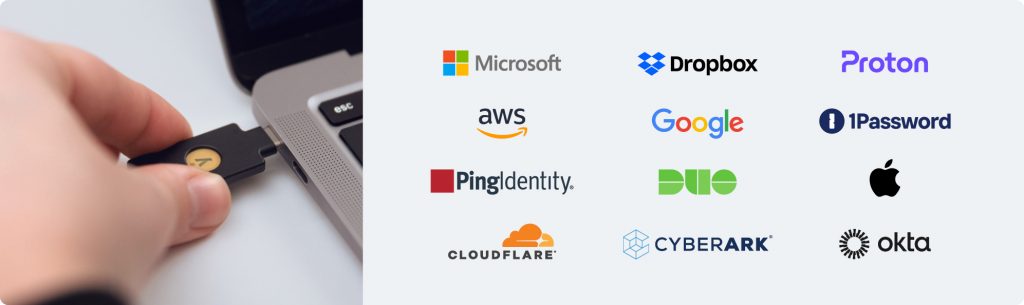
YubiKeys work with leading IDPs, IAM, and PAM solutions and secure user access across 1,000+ of applications and services. Some partners we collaborate with as part of our Works with YubiKey (WWYK) catalog:
The path forward to cultivate phishing-resistant users
No matter where you are on your MFA journey, we’ll meet you there. You can accelerate your zero trust approach and gain a bridge to a passwordless future. With a tried and true process that many critical infrastructure organizations have followed already—and with a ‘YubiKey as a Service’ model—it’s not a matter of if you’ll be successful but when you’ll be successful in raising your bar for security with modern, hardware-backed passkeys such as the YubiKey.
