Modernizing authentication to support cyber resilience and business continuity
Reduce cyber risk, accelerate digital transformation, and keep your business running smoothly by creating a phishing-resistant enterprise.
Why is there a structural disconnect between business continuity and cybersecurity?
For years, organizations have treated Business Continuity Planning (BCP) and Cybersecurity as separate disciplines. This operational silo has created a critical vulnerability.
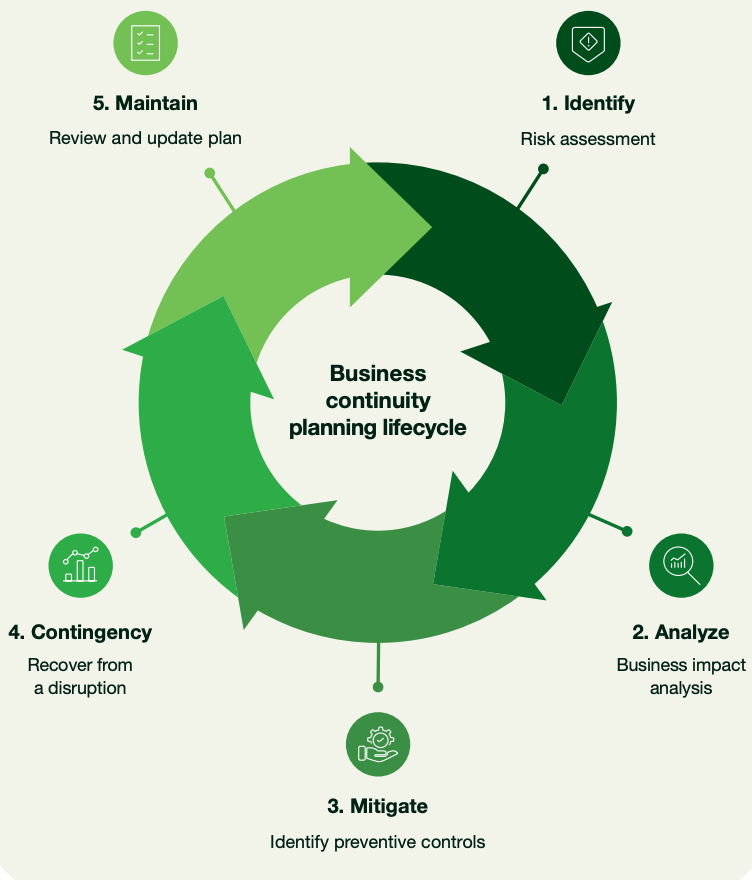
This reporting structure creates a troublesome blind spot: continuity plans routinely make assumptions about multi-factor authentication (MFA) coverage and reliability that simply do not hold up during a crisis. When a disruption occurs, whether it is a targeted cyber attack, a mobile network outage, or a supply chain compromise, the financial and reputational fallout accumulates by the second.
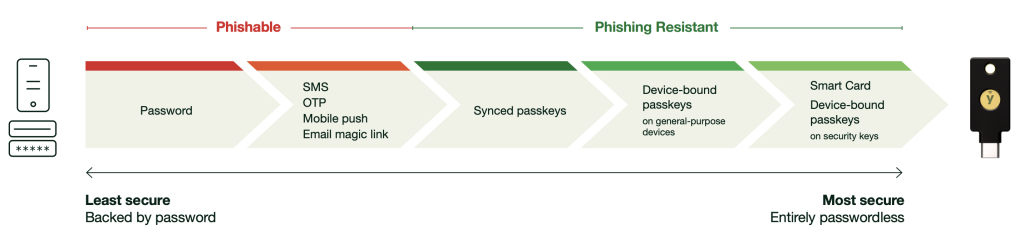
The fallacy of “good enough” MFA: Attackers no longer break in—they log in. Legacy MFA methods (SMS, OTP, mobile push) are bypassed by modern threat actors meaning standard authentication strategies actively jeopardize business continuity. Legacy MFA vulnerabilities jeopardize the cyber hygiene of your organization.
Why is the traditional definition of a privileged user flawed?
Historically, enterprises focused their highest security measures strictly around IT administrators and executives. Today, that approach leaves the back door wide open.
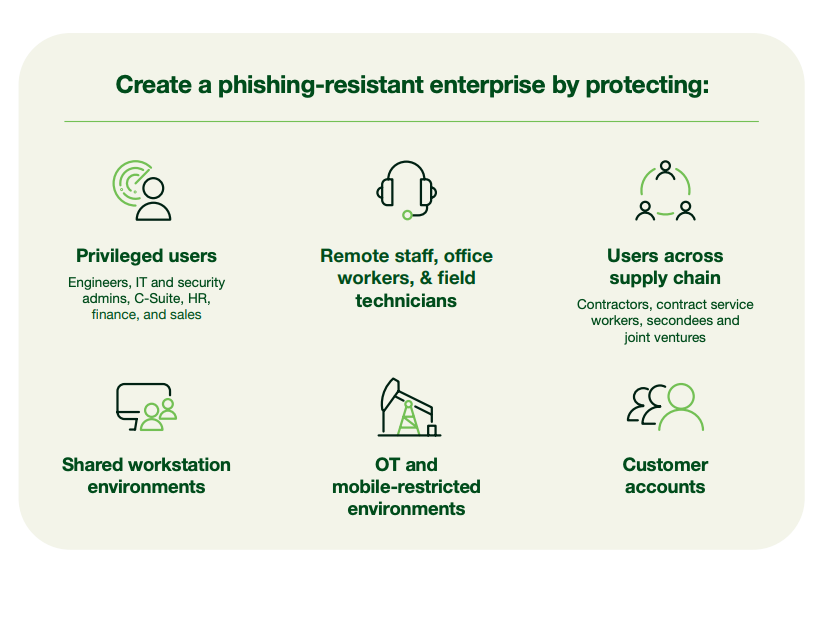
In a hyper-connected enterprise, every user who possesses access to exploitable systems or intellectual property is a privileged target. Attackers routinely compromise low-risk, non-administrative accounts to establish a foothold and move laterally across networks (both IT and OT).
True resilience demands that we treat every employee, field technician, contractor, and supply chain vendor as a privileged user under a unified, phishing-resistant framework using phishing-resistant MFA to protect user access. Modern authentication supports cyber resilience and business continuity.
Phishing-resistance: The draft National Institute of Standards and Technology (NIST) Digital Identity Guidelines (SP 800-63-4), outlines the technical requirements for phishing-resistant authentication, recognizing two methods as being phishing-resistant: channel binding which is used with PKI-based Smart Card and verifier name binding which is used with Fast Identity Online (FIDO)-based credential and authenticator.
How can organizations build a blueprint for continuous access?
To help organizations bridge the gap between authentication strategy and business continuity, read this white paper to explore a framework built on establishing a hardware-based, portable root of trust across your entire enterprise architecture.
Key strategic pillars addressed in this white paper:
- Securing the complete account lifecycle: Moving past the single moment of user authentication to eliminate highly vulnerable fallback secrets during onboarding, device registration, and account recovery.
- Mitigating mobile authenticator vulnerabilities: Managing the operational risks of mobile-based MFA—such as dead device batteries, lost phones, and lack of cellular coverage—which frequently cause direct production loss.
- Emergency “break glass” architecture: Implementing traceable, high-assurance cryptographic keys for critical cloud-only emergency accounts to maintain access during identity provider (IdP) outages or service breaches.
- Secure workstation bootstrapping: Utilizing physical security keys to rapidly redeploy, wipe, and restore authorized corporate laptops or workstations securely without helpdesk vulnerabilities.
- Alternate site recovery & key management: Leveraging compact hardware security modules (like the YubiHSM 2) to seamlessly transfer cryptographic roots of trust and maintain compliance across multi-cloud environments during geographic relocations.
How can you future-proof your enterprise infrastructure?
Syncable passkeys stop phishing, but they can be copied between devices and accounts. Hardware passkeys built on FIDO2 protocols deliver phishing resistance by binding user authentication to a physical device’s secure element, preventing credentials from being copied. Transitioning to a hardware passkey provides NIST AAL3 level security and the following:
| Executive metric | Operational impact with the YubiKey |
| Defensive efficacy | Reduction in exposure to phishing and credential theft by 99.99%. |
| Workforce velocity | Accelerates daily operations by decreasing user authentication time by >4x. |
| Environmental durability | Deploys battery-free, crush-resistant, IP68-certified hardware built for harsh industrial or air-gapped networks. |
How do you quantify the business value of cryptographic certainty?
Do not let your business continuity planning falter at its weakest point. Discover how global enterprises like Schneider Electric use a portable root of trust to defend their manufacturing lines, secure their supply chains, and satisfy stringent international regulations like DORA, HIPAA, and FISMA cryptographic key management.